
Environmental Memory and Justice in Post-Conflict El Salvador
Over the past year, Giada Ferrucci – Western University Postdoctoral fellow in the Surviving Memory in Postwar El Salvador project – has worked with community members to explore how landscapes hold memories of war and environmental change in the departments of Cuscatlán, Chalatenango, San Vicente, Morazán, and Cabañas. This work has been carried out in collaboration with Agustín García from Future Watch.
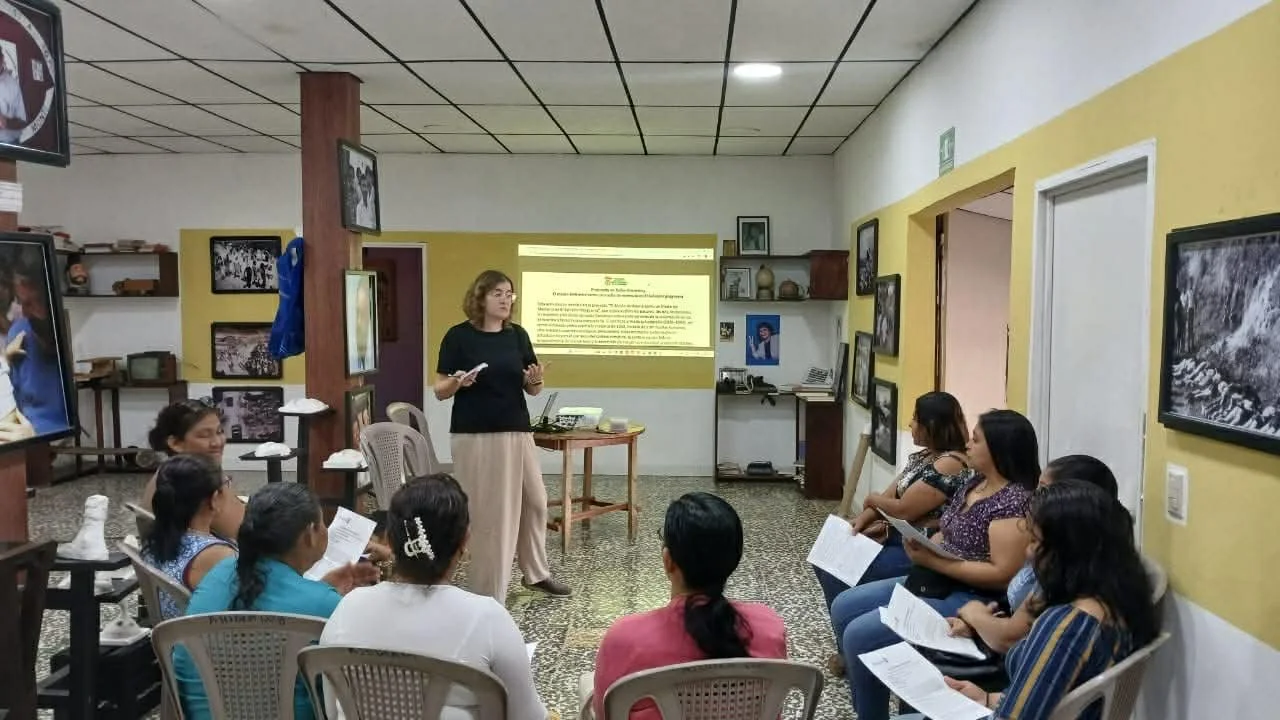
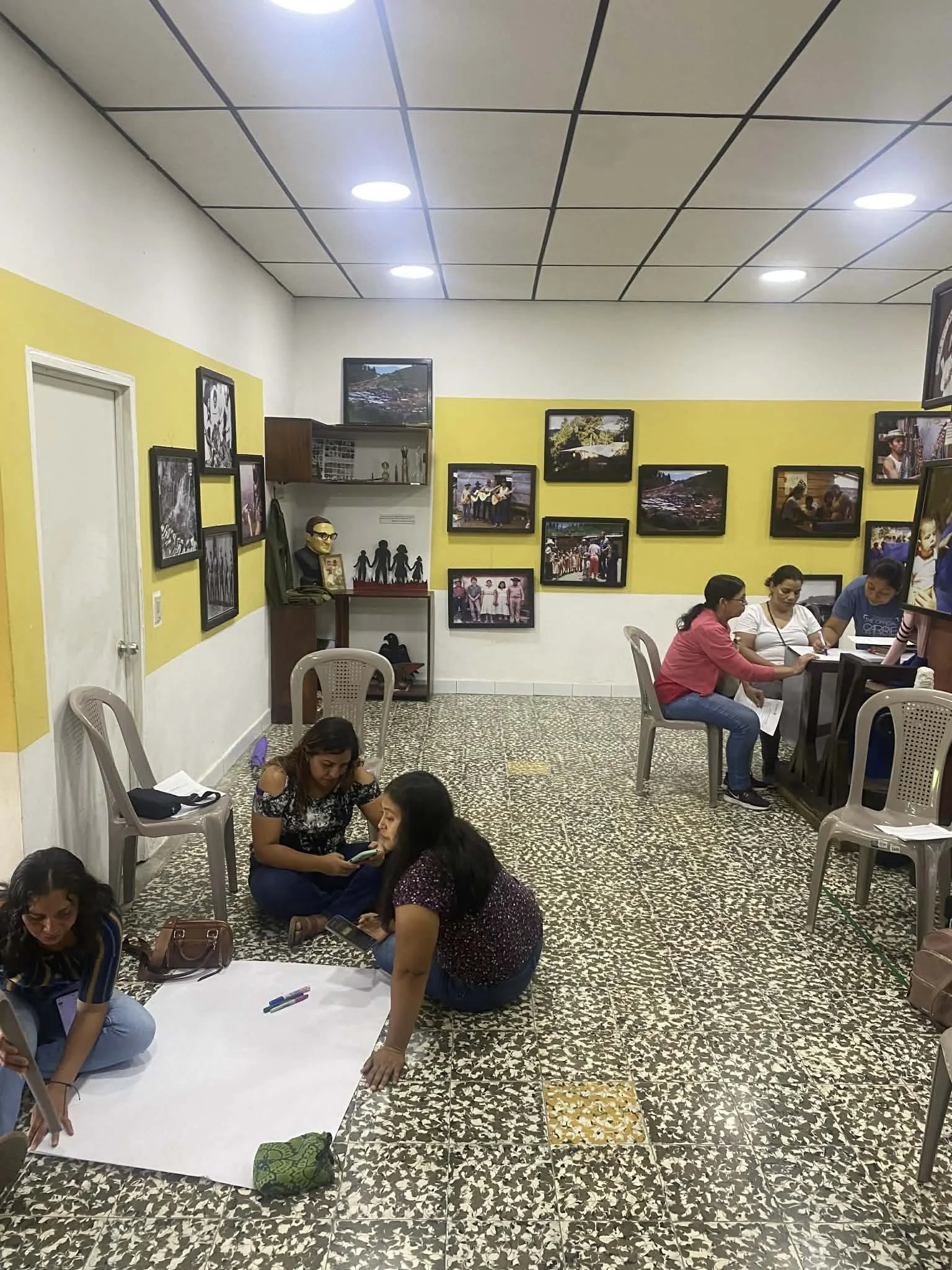
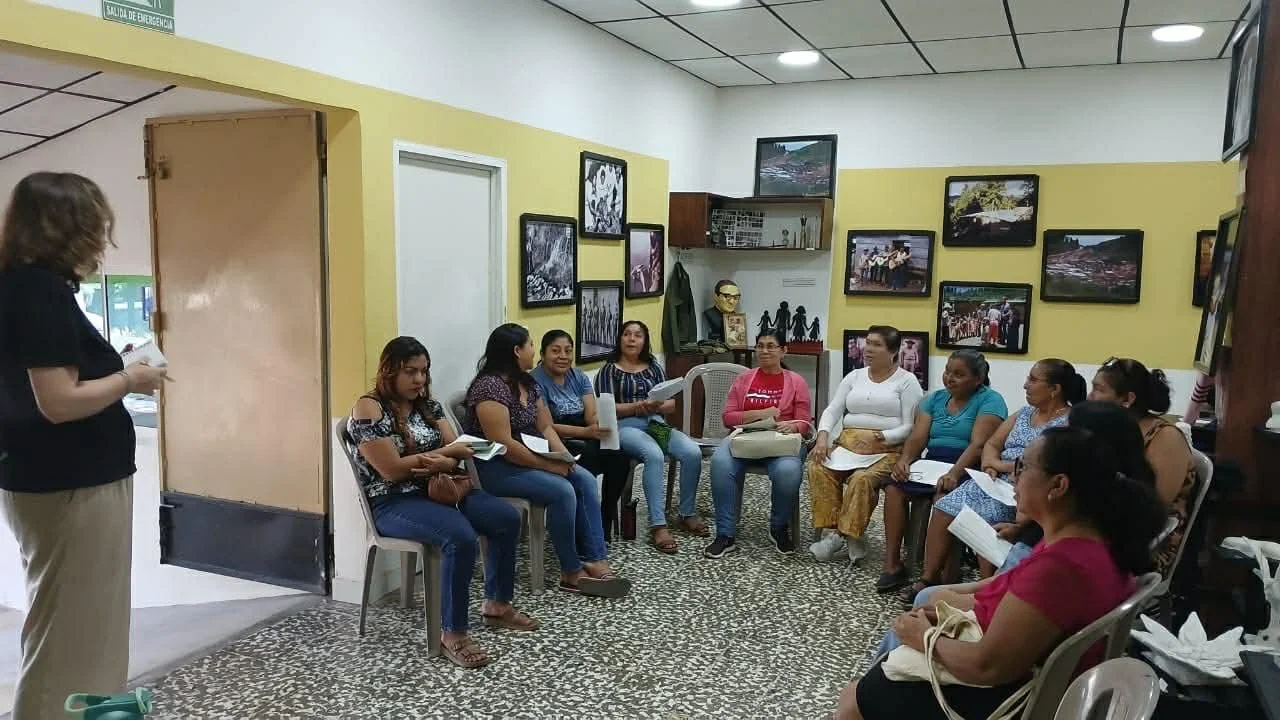
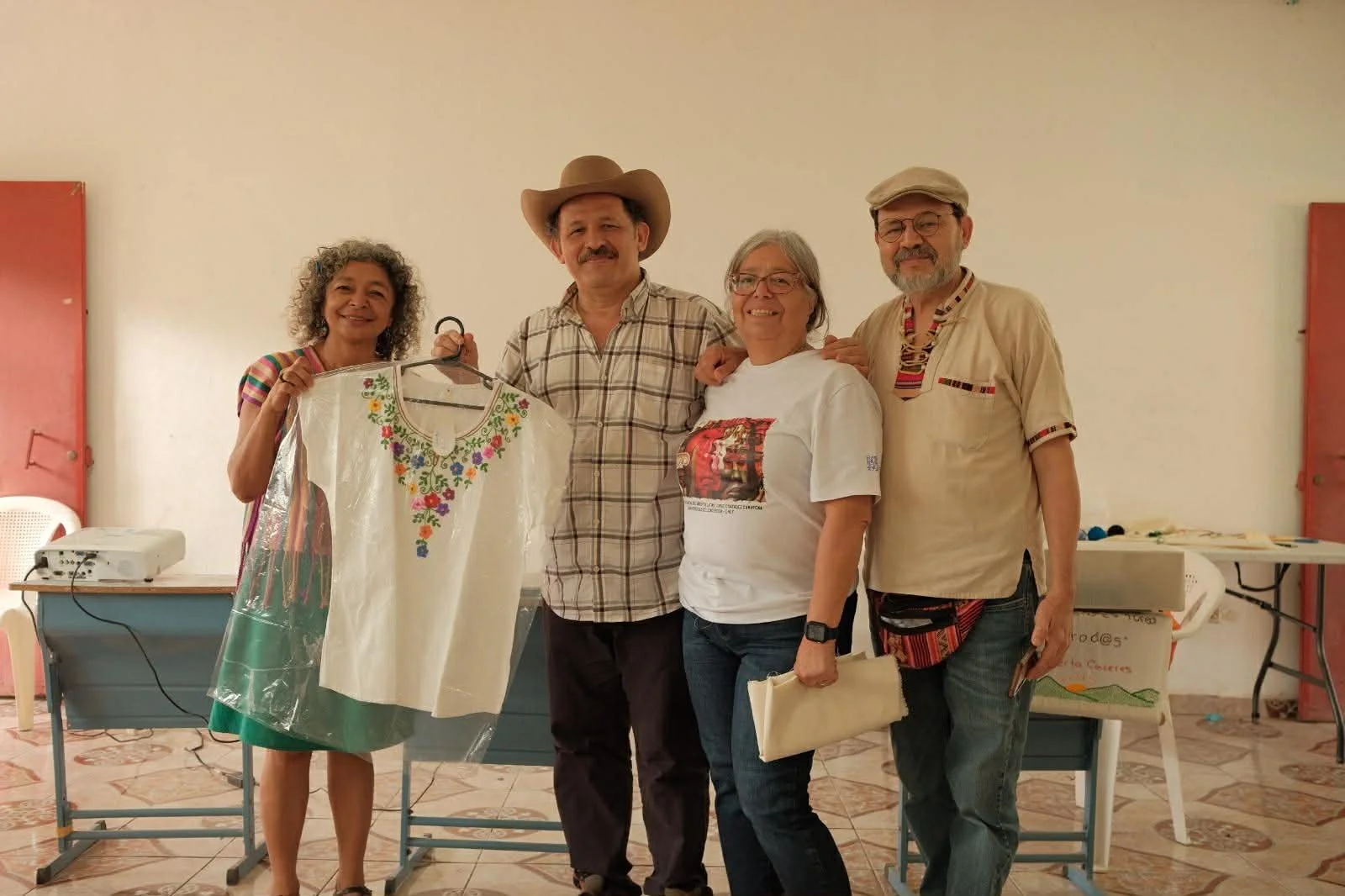
Through workshops, interviews, and participatory mapping activities focused on the long-term ecological consequences of the civil war — including forest loss, river pollution, and land degradation — Civil War survivors and community leaders reflect on how climate change is intensifying environmental damage that began during the conflict. Additional workshops on environmental memory were organized through embroidery (bordado) activities with community members in Las Vueltas, Chalatenango, and at the Museo Tierra Prometida [Promised Land Museum] in Morazán, creating spaces for participants to reflect collectively on landscapes, memory, and environmental change through creative practices.
These activities complement the design of an Atlas of Environmental Memories, a bilingual community-based resource that documents ecological knowledge, historical memory, and environmental justice struggles in El Salvador.
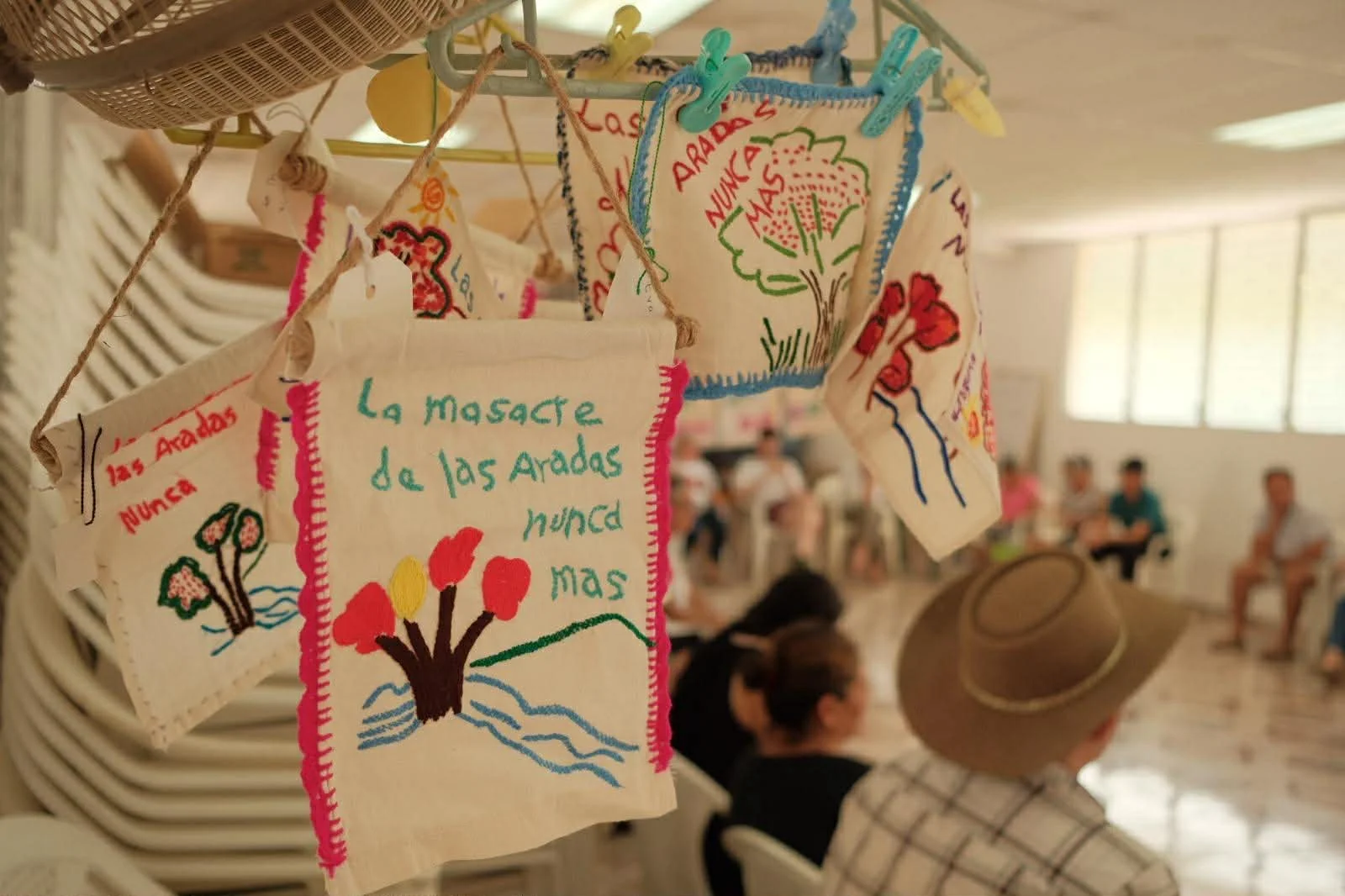
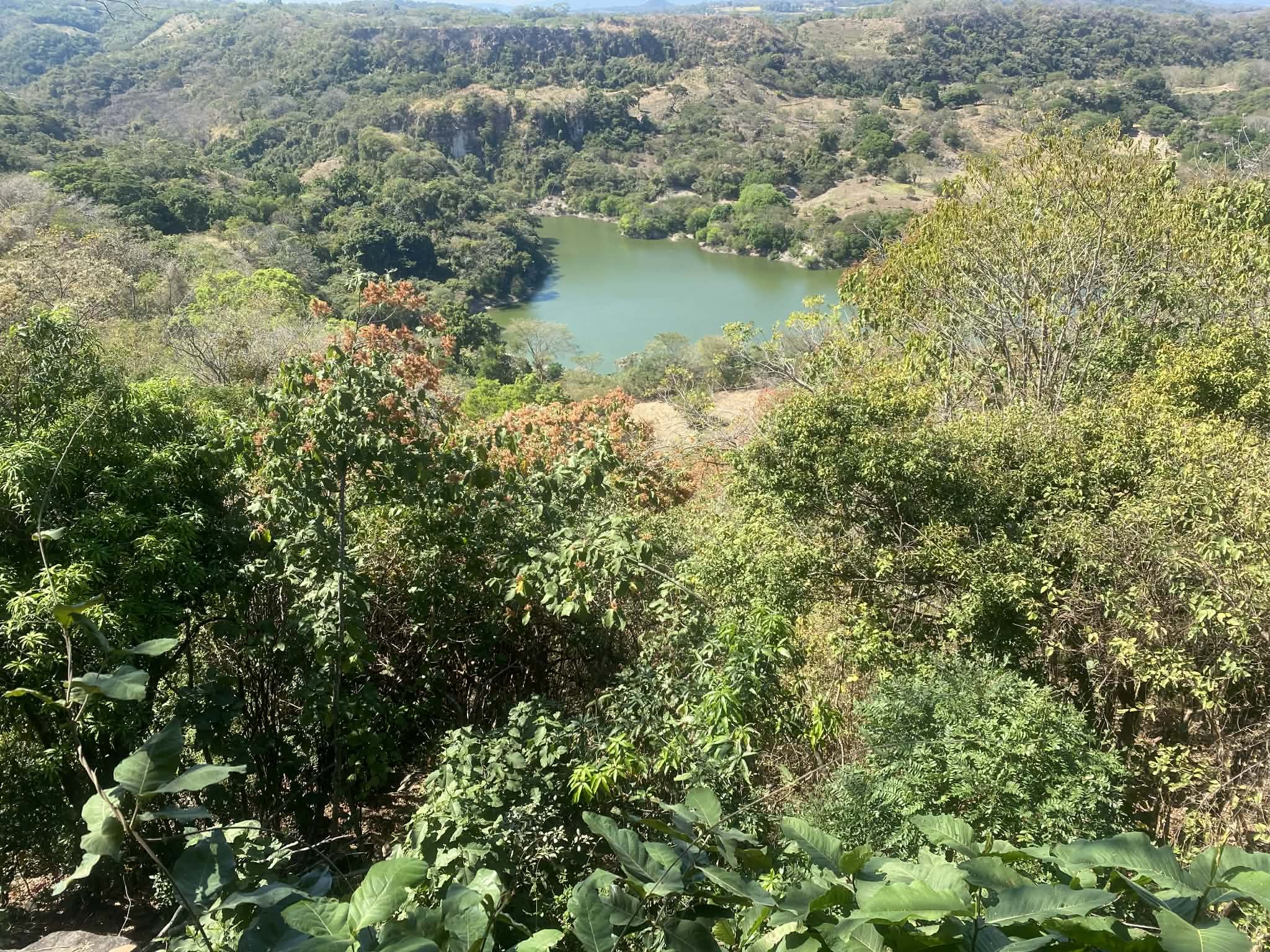
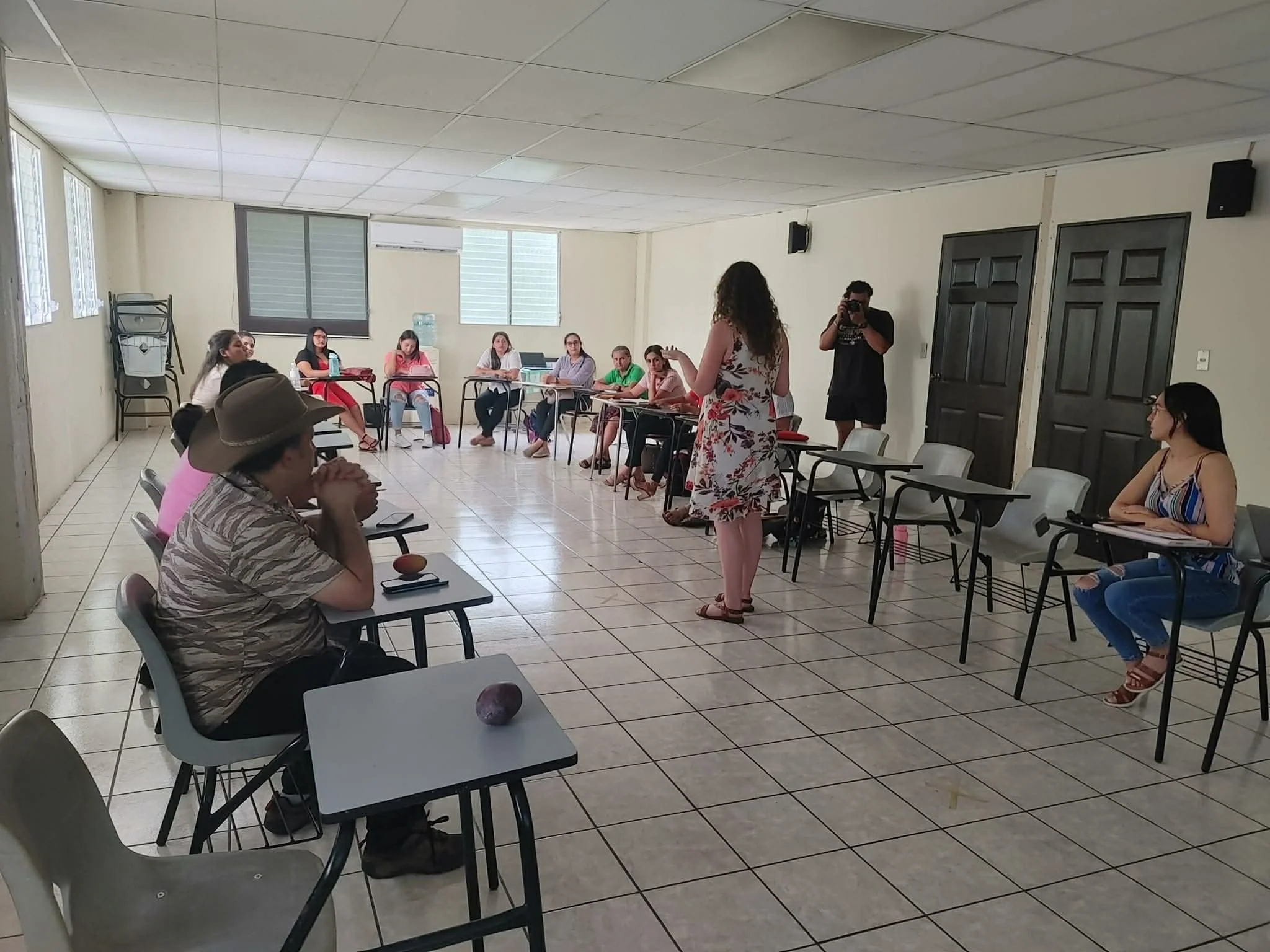
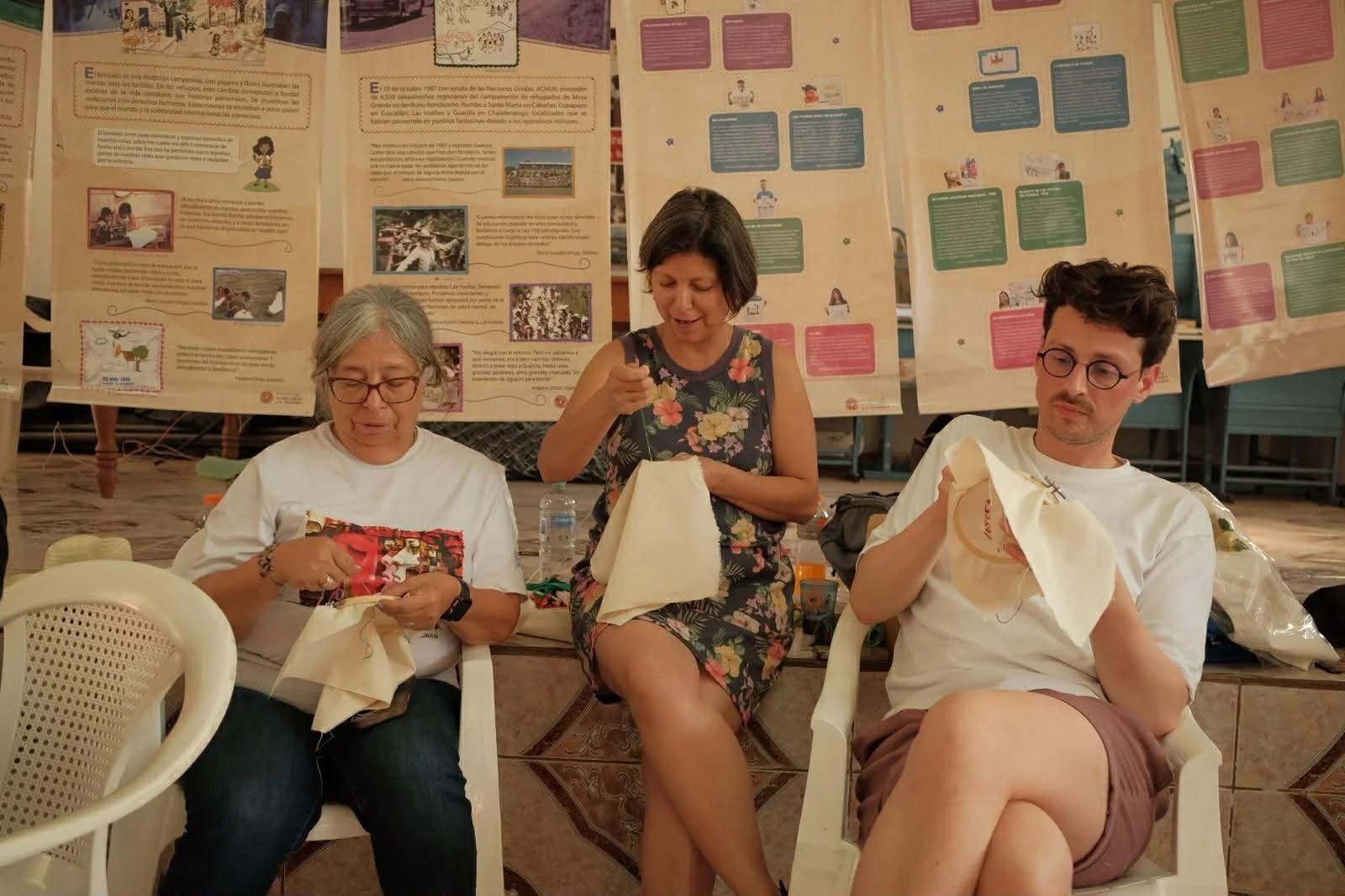
The Surviving Memory in Postwar El Salvador research initiative is supported in part by funding from the Social Sciences and Humanities Research Council of Canada, Western University, the Canadian Foundation for Innovation, and the Ontario Research Fund.
Deborah Canales joins Surviving Memory for a six-month placement focusing on Salvadoran women
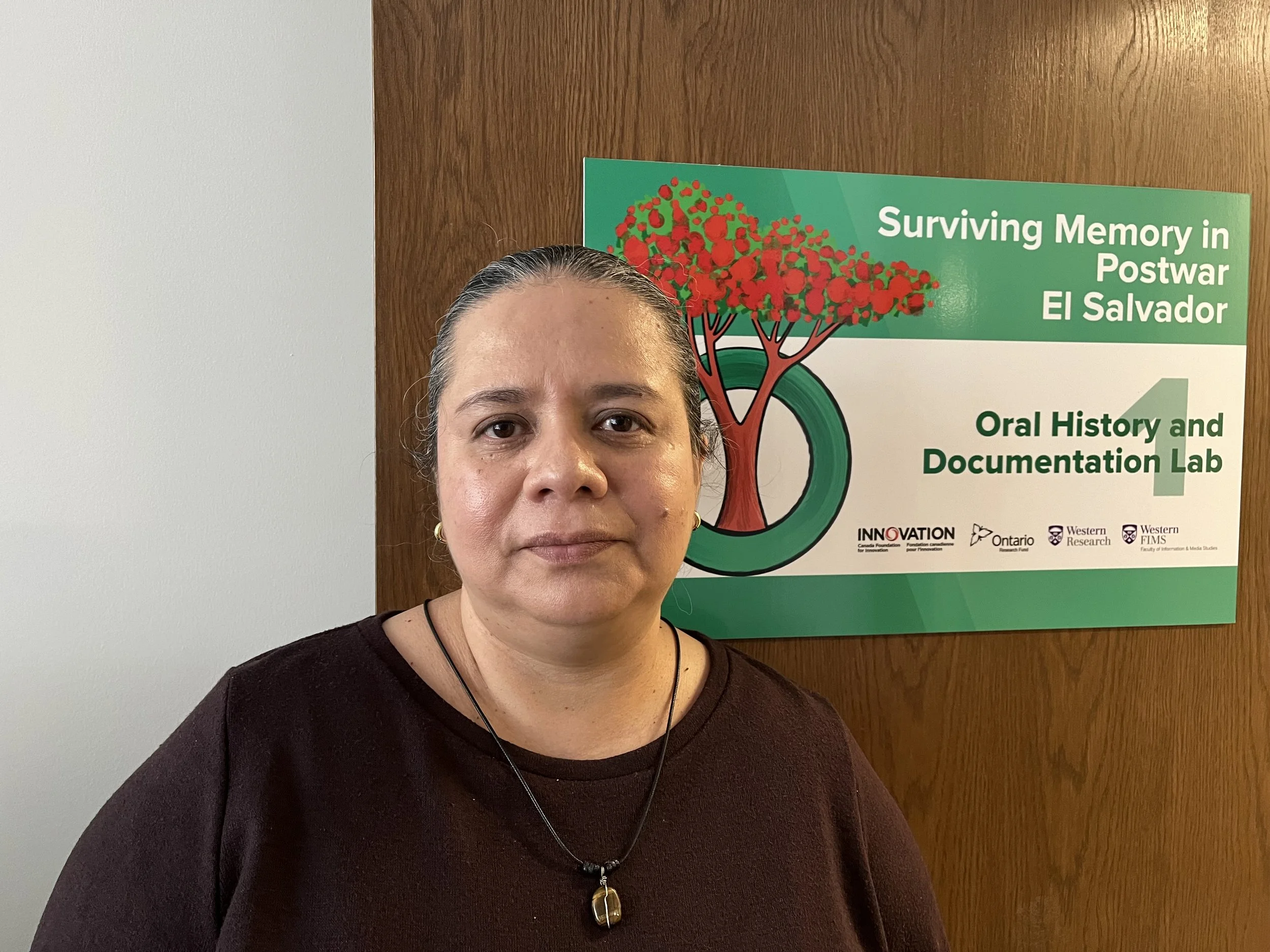
Social Work master’s student Deborah Canales (York University) has begun a six-month placement with Surviving Memory in January 2026. Her work will focus on the violence inflicted on Salvadoran women during the Civil War (1980–1992) – a subject tied to her family’s history, who fled El Salvador during La Ofensiva [The Offensive], when guerrilla forces entered the capital, San Salvador, in 1989.
As the practical component of her degree, Canales will support interviews that document the lives of Salvadoran women who migrated to Canada: the violence they experienced, how displacement shaped their lives, and how they redefined their trajectories. Canales will also analyze archives and related materials collected by Surviving Memory and York University. As she states: “I’m really interested in the violence these women experienced because of the Civil War, and the governments of El Salvador for decades, and how it is connected to the process of colonization and neoliberal politics.”.
Canales first connected with Surviving Memory during her undergraduate Sociology studies at King’s College, when she took project co-founder Amanda Grzyb’s field course in El Salvador in February 2025. She has followed the project’s work since then. Reflecting on this new step, she said “this placement is a great way to connect my studies with the history that affected my life and so many Salvadorans in the diaspora.”
Digitizing the CERLAC Solidarity Collections
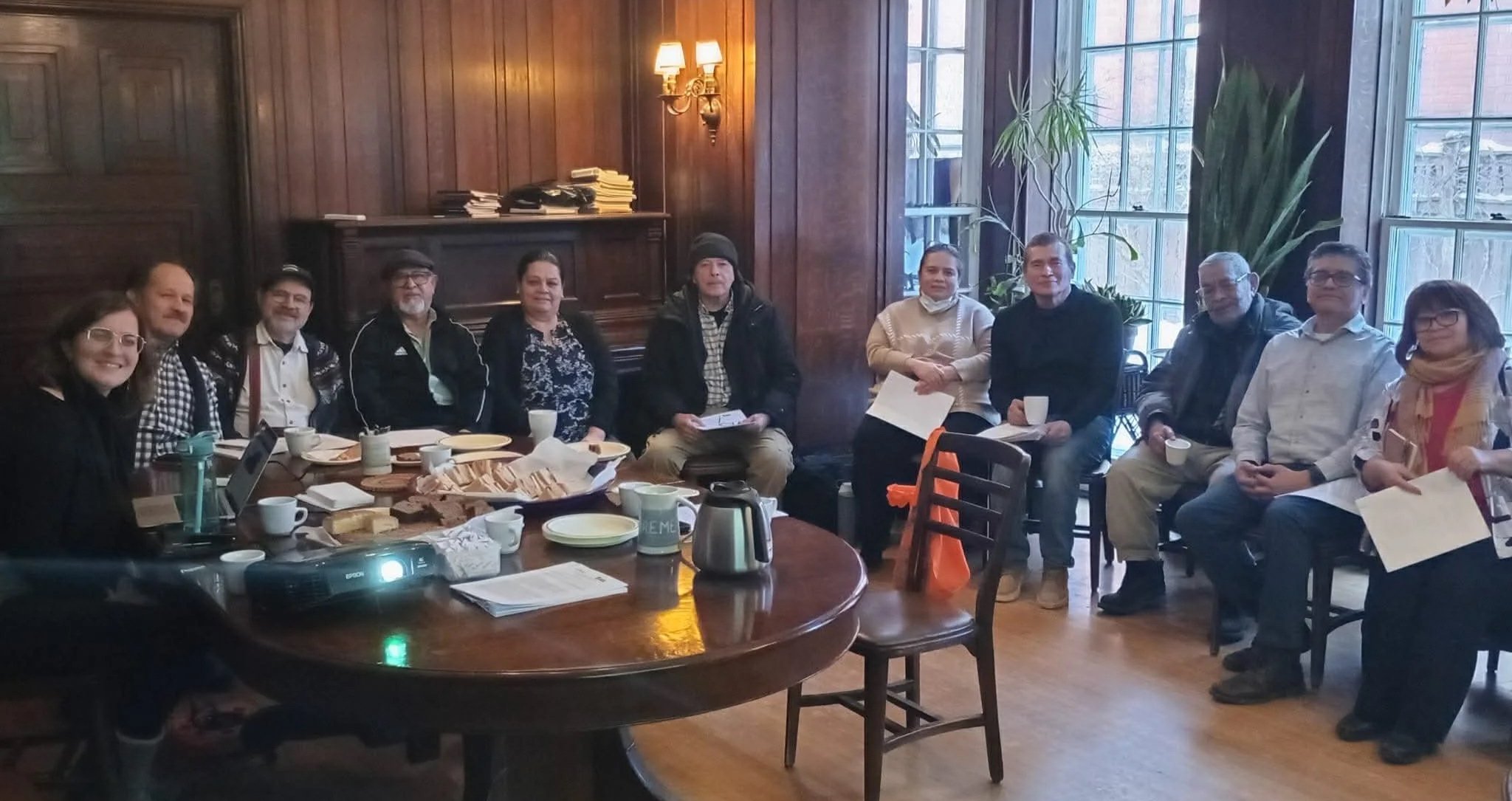
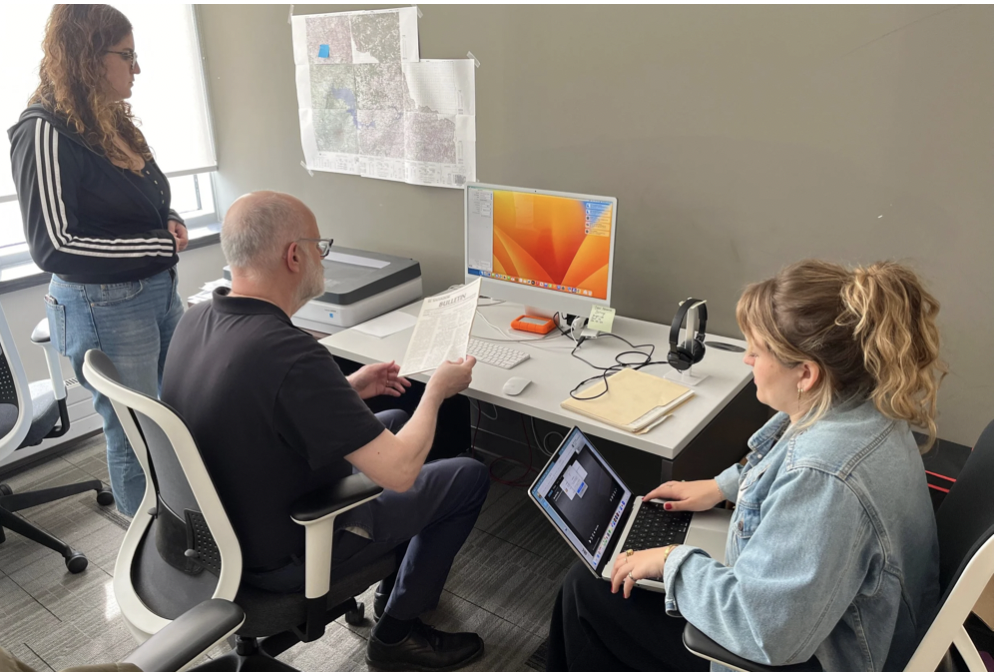
As part of the Surviving Memory in Postwar El Salvador project, a research team of 7 undergrad students coordinated by Western University Postdoctoral fellow Giada Ferrucci has been undertaking a long-term initiative to scan, digitize, and catalogue archival materials documenting North American solidarity with El Salvador during the 1980s and 1990s. Working with the collections held at the Centre for Research on Latin America and the Caribbean (CERLAC) at York University, the team is carrying out the systematic scanning of documents, photographs, posters, and campaign materials, while also developing detailed metadata to facilitate future research and public access.
At this stage, the digitized collection includes 14 boxes, 262 folders, and approximately 6,216 documents across the 14 boxes that have been scanned.
A collaborative workshop held in Toronto on January 31, 2025 brought together researchers, students, and community members to explore these materials collectively and reflect on the histories they document. Participants reviewed archival items produced by solidarity organizations that mobilized support for human rights during the Salvadoran Civil War and discussed the ongoing importance of preserving these records. This digitization effort ensures that the histories of international solidarity remain accessible and continue to inform contemporary movements for justice and human rights.
The Surviving Memory in Postwar El Salvador research initiative is supported in part by funding from the Social Sciences and Humanities Research Council of Canada, Western University, the Canadian Foundation for Innovation, and the Ontario Research Fund.
Rethinking Intergenerational Trauma, an article about forced migration and violence
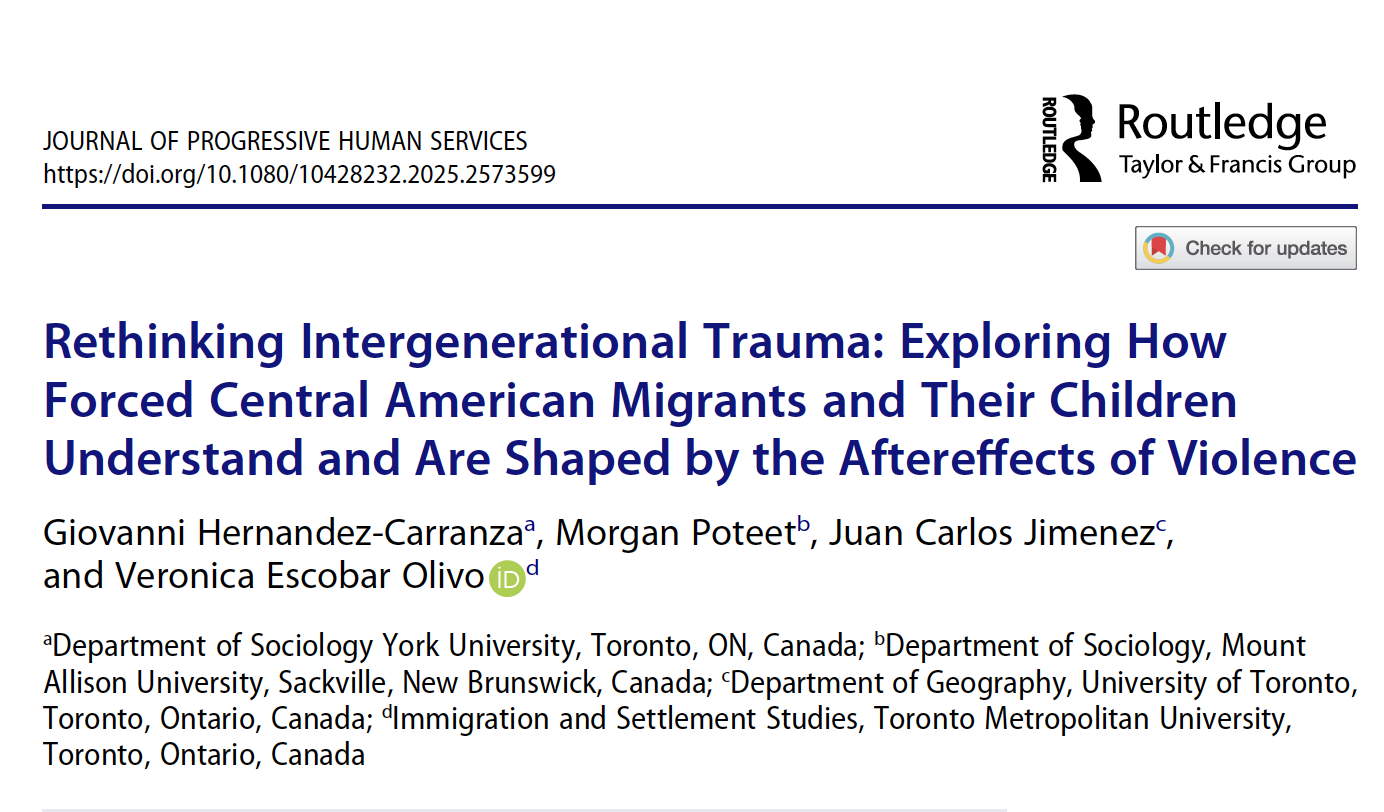
¿How do forced Central American migrants and their children make sense of violence’s aftereffects, and how do those aftereffects shape their lives? The “Rethinking Intergenerational Trauma” article explores this question through oral histories with twenty-one people of Salvadorian, Guatemalan, Honduran, and Nicaraguan backgrounds who were born in Canada or arrived at a young age. The interdisciplinary author team includes Giovanni Hernandez-Carranza, Morgan Poteet, Juan Carlos Jimenez, and Veronica Escobar Olivo.
The authors use a coloniality lens and a community-based approach to understand how people interpret family histories of violence in the present, and how those interpretations shape relationships and identity. They utilize a narrative analysis of in-depth interviews because the approach “centers participants' voices and emphasizes the co-creation of knowledge."
The article also shows how dominant Western psychological frameworks can narrow how people explain harm and coping. As the authors note, “participants relied on Eurocentric ideas of ‘trauma’ to understand violence’s aftereffects,” which can lead to “individualization, psychologization, and pathologization” of struggles that also have social and historical roots. The discussion points instead toward decolonial community organizing and non-Western ways of healing that reconnect people with community ties, cultural knowledge, and shared meaning-making.
Documenting the Salvadoran Diaspora in Canada
Through a long-term collaboration with the Salvadoran Canadian Association (ASALCA), the Surviving Memory in Postwar El Salvador project has been documenting the experiences, histories, and contributions of the Salvadoran diaspora in Canada. Through interviews, oral history recordings, and community conversations, the project explores migration histories, the political and social drivers of displacement, cultural identity, and the ways Salvadoran communities in Canada have preserved historical memory while building new forms of community life. These interviews highlight personal narratives of migration, solidarity activism, cultural heritage, and the ongoing connections between diaspora communities and El Salvador.
This research contributes to multiple community-based outputs developed in collaboration with Salvadoran community organizations. One major outcome will be a collaborative community book that documents the history, resilience, and cultural contributions of Salvadorans in Canada through testimonies, archival materials, photographs, and historical reflections. The research also contributes to the development of a future digital museum dedicated to Salvadoran migration and heritage in Canada, which will bring together oral histories, photographs, archival documents, and multimedia materials to create an accessible public resource preserving the collective memory of the Salvadoran diaspora.
The Surviving Memory in Postwar El Salvador research initiative is supported in part by funding from the Social Sciences and Humanities Research Council of Canada, Western University, the Canadian Foundation for Innovation, and the Ontario Research Fund.
“The Lasting Legacy of the Salvadoran Civil War on Environment and Health,” an essay by Amaan Thawer
Surviving Memory research assistant Amaan Thawer has published the essay “The Lasting Legacy of the Salvadoran Civil War on Environment and Health” on the Planetary Health Alliance website this November 2025.
In the piece, Thawer examines El Salvador’s ongoing environmental crisis and its deep connections to the country’s Civil War (1979–1992). He analyzes the current state of pollution, deforestation, and intensive agrochemical use, arguing that these problems cannot be understood in isolation from the violence and displacement of the war. “Much like other social and ecological vulnerabilities, El Salvador’s current environmental fragility is deeply rooted in the trauma and destruction of its civil war,” he writes.
The essay also highlights the work of the Centro Salvadoreño de Tecnología Apropiada [Salvadoran Center for Appropriate Technology,CESTA], which denounces environmental harm caused by industries and governments while promoting practical alternatives such as cycling, composting organic waste, recycling, and forest protection. Thawer draws on insights from CESTA director Dr. Ricardo Navarro, who has long documented war-related environmental damage. “Among the most destructive tactics employed during the war was the scorched-earth strategy – an ecocidal approach involving widespread aerial bombardments using napalm and white phosphorus to incinerate forests and campesino farmlands,” Thawer notes. “Ecological destruction wasn’t incidental; it was instrumentalized to break communities’ capacity to survive.”
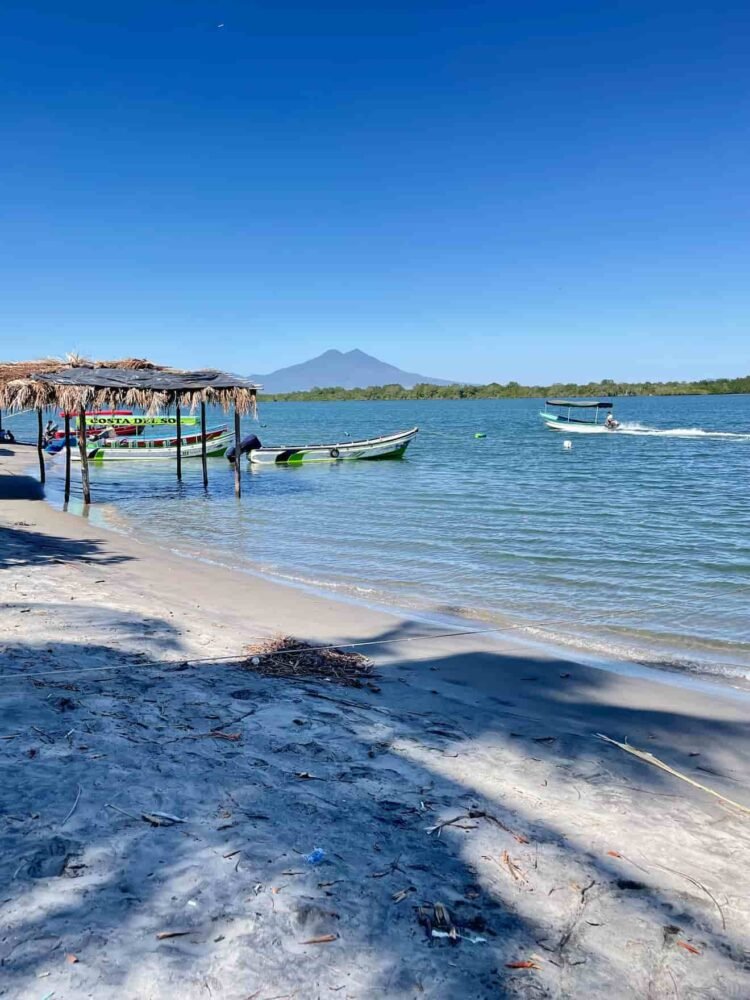
Photo by Amaan Thawer during his time on Tasajera Island, El Salvador.
“Con un gran amor”: Photos, Stories, and Reflections from Postwar El Salvador — CRS/CERLAC seminar at York University, November 12
Members of the Surviving Memory team will present “‘Con un gran amor’: Photos, Stories, and Reflections from Postwar El Salvador” in a hybrid seminar at York University on Wednesday, November 12, 2025. Speakers include Adriana Alas, Giada Ferrucci, and Amanda Grzyb (Western University); Morgan Poteet (Mount Allison University); and Jocelyn Torres (York University). The event is organized by the Centre for Refugee Studies (CRS) and the Centre for Research on Latin America and the Caribbean (CERLAC). Join in person or via Zoom.
Abstract
This seminar explores the use of Photovoice as a creative participatory research and community engagement method within the Surviving Memory in Postwar El Salvador project. Photovoice is an accessible and flexible method that allows participants to document issues, identify strengths, and direct action within their communities. We engaged with survivors and community collaborators using Photovoice to explore memory, identity, and resilience in postwar El Salvador. This presentation will show and reflect on Photovoice projects from three different communities in El Salvador that highlighted themes of mental health, community and gendered memory, urbanization, and the natural environment variously within each context and the wider historical context of El Salvador.
Event details
When: Wednesday, November 12, 2025, 11:00 a.m.–12:30 p.m. (Toronto).
Where: In person – Room 280N, York Lanes, Keele Campus, York University; Zoom (registration required): https://yorku.zoom.us/meeting/register/H2uotL1VRxiLZGGTjE_qBQju

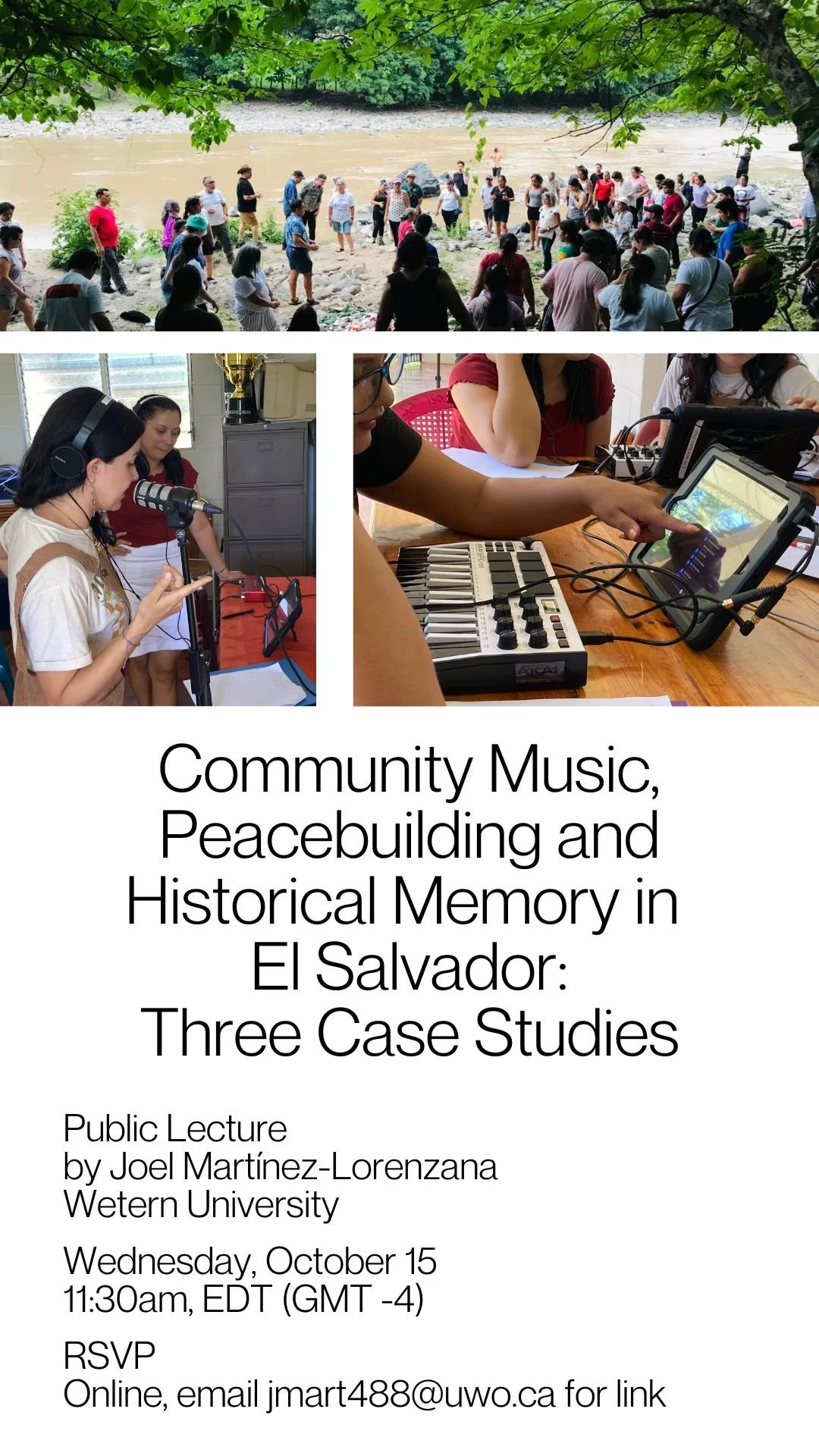
Join Joel Martínez-Lorenzana’s PhD online public lecture about Salvadoran community music on October 15
Innovative approaches to Salvadoran community music are the topic of Joel Martínez-Lorenzana’s PhD public lecture on Wednesday, October 15, 2025. He will give the presentation, “Community Music, Peacebuilding, and Historical Memory in El Salvador: Three Case Studies,” online, starting at 11:30 a.m. EDT (UTC−4).
RSVP to jmart488@uwo.ca for the videoconference link.
About Joel
Joel Martínez-Lorenzana worked for ten years as a faculty member in the Art Department at the National Autonomous University of Honduras and coordinated its Bachelor of Music program from 2016 to 2019. In May 2021, Martínez completed a master’s degree in Piano Performance and Pedagogy at Arizona State University, U.S. In the fall of the same year, he began a PhD in Music Education at Western University, Canada. His research explores innovative approaches to music teaching and learning, imagining ways to transform, transgress, and delink music from practices that oppress and render diverse groups invisible.
New Postdoc Dr. María Laura Flores Barba joins the Surviving Memory Team
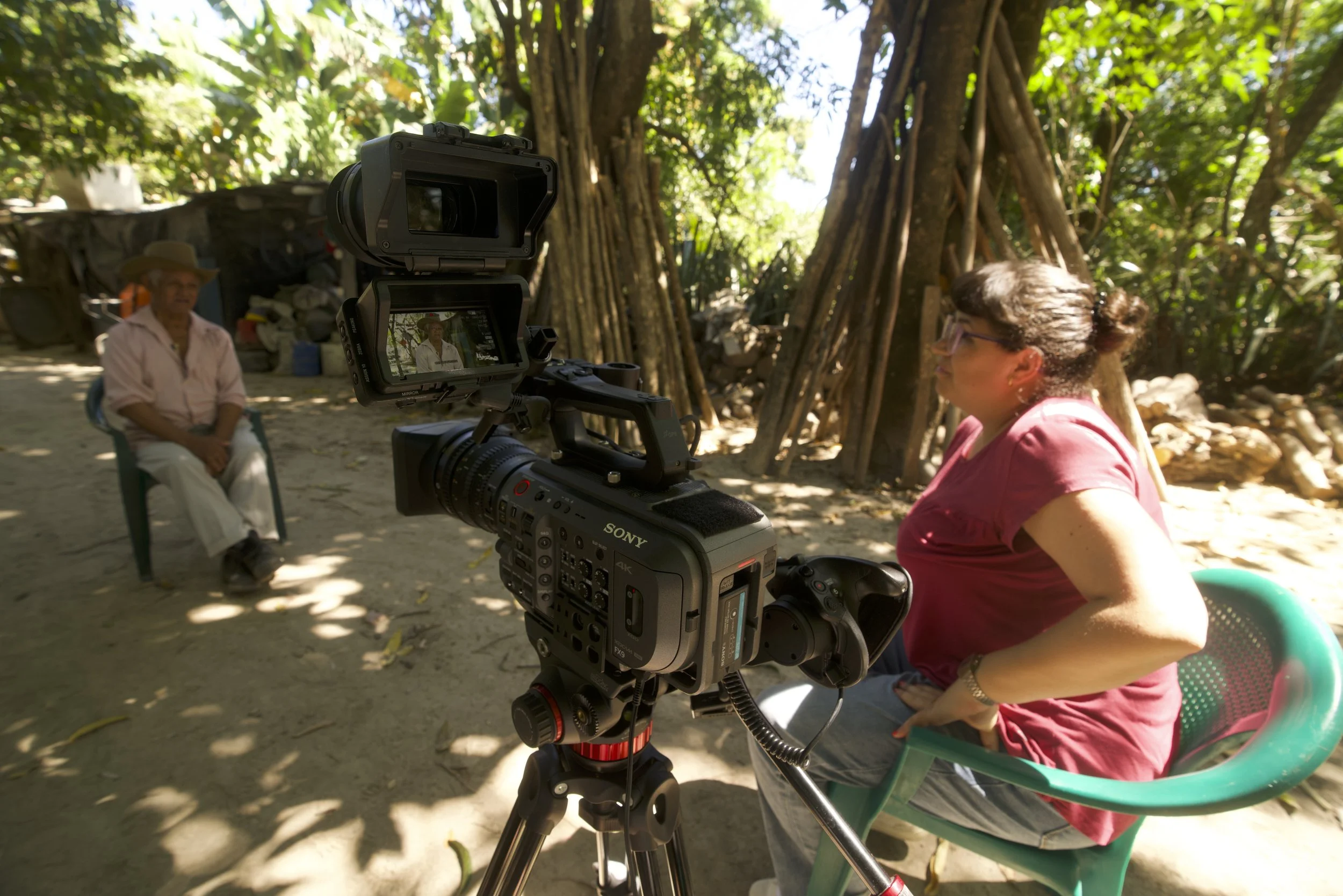
“Serendipity.” That’s how Mexican art historian Dr. María Laura Flores Barba describes first hearing about Surviving Memory. In September 2017, while teaching a beginner Spanish class, project founder Amanda Grzyb audited a few sessions. They stayed in touch. Dr. Flores Barba became a research assistant, joined fieldwork, and began rethinking how her work connects past and present—treating people in historical records as members of real communities.
In El Salvador, she spoke with survivors and families about what they lived through. The experience highlighted how local networks help people process the past and organize for the future. “I started talking to people, understanding what happened to them. And I loved doing fieldwork,” she says. “As a Latin American, I knew about Central American conflicts in general, but I learned about the Salvadoran Civil War directly from those who experienced it.”
Back in Canada, she revisited her PhD on colonial Mexican painters with a focus on relationships and networks, not only artworks and dates. That shift led to a digital database mapping 17th–18th century Mexican painters through their social ties, so they appear as people, not just subjects of study. You can explore the research outline and interactive map here.
With her PhD completed in June 2025, Dr. Flores Barba is beginning a two-year Western Postdoctoral Fellow with Surviving Memory. She is working on three connected projects:
1) Community-sourced photo archive
She is coordinating crowdsourced metadata for a digital archive of photographs of the Loreto Sisters, a Toronto-based group of nuns that supported community rebuilding in El Salvador. The archive will let Salvadorans identify people and places and add context and stories.
2) Copapayo Village history book
She is supporting local community leader and historian Otilio Ayala on a book about the history of Copapayo, a village destroyed during the war and the site of a massacre, with an emphasis on accessible documentation that centers community accounts.
3) Virtual reconstruction
Working with the map librarian at Western University Libraries, she is helping turn Copapayo’s community memory into structured data—where houses stood, how streets were organized, and what daily life looked like before the war. Community workshops will present and discuss previews to help ensure a faithful virtual reconstruction of the village.
Among learning from different experiences, hearing tough stories of the past and finding creative ways to represent them and bring them to the present, Dr. Flores Barba is most excited to keep creating connections and working with the team. “As a historian, I used to work individually. We just go to an archive and write our things, and we don't really share much,” she remembers. “Now, I have discussions with the team, we think together and try to solve a problem together. It is teamwork and collaborative work to the fullest. And I love it. I like people and I like connecting.”
Threads that Unite Us: Collective Art Gathering with Salvadoran Artist Teresa Cruz at Western
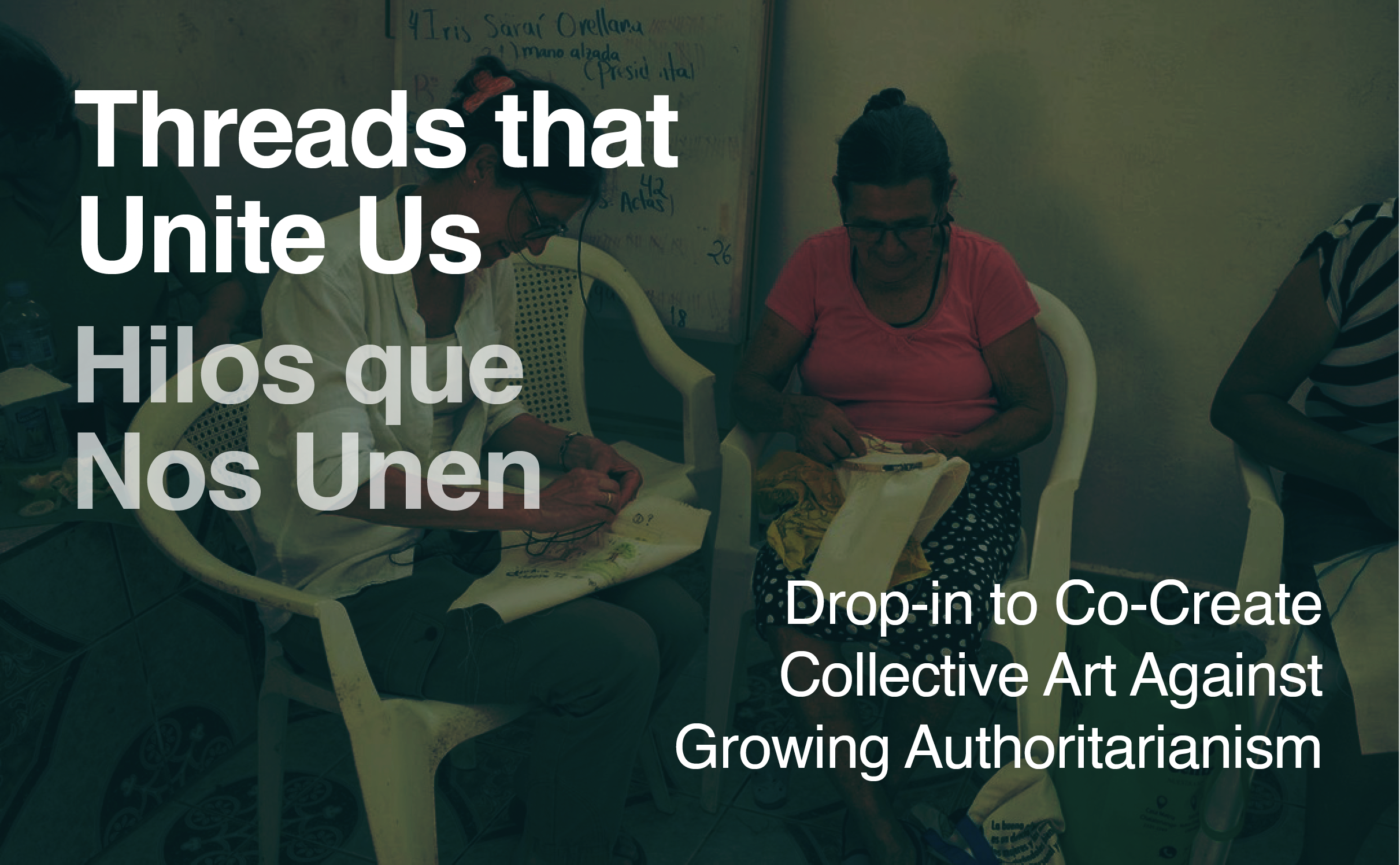
Western University will host Salvadoran embroiderer and visiting artist Teresa Cruz for a drop-in collective art gathering on October 2 and 3. The atrium of the FIMS and Nursing Building (FNB) will transform into a studio where participants will help create a large tapestry of resistance.
Participants are invited to stitch a small piece of the tapestry. Through the slow, mindful act of embroidery, craft becomes both solidarity and defiance – against fascism, white supremacy, authoritarianism, escalating attacks on trans lives and 2SLGBTQIA+ communities, and the persistence of misogyny. Each stitch is personal and communal – an image, word, or symbol of resistance – woven into a larger fabric that unites shared struggles.
Students, faculty, and staff are welcome to create art that both resists and heals, regardless of embroidery experience.
This is a drop-in collaborative event: arrive at any time, begin a new piece, or continue one left by another participant. Accompanying artists Soheila K. Esfahani, Tricia Johnson, and Kayla MacInnes will also join the gathering.
Event Details
What: Threads that Unite Us — Collective Art Drop-In Gathering
When: Thursday, October 2 (10:00 a.m.–4:00 p.m.) & Friday, October 3 (9:00 a.m.–12:00 p.m.)
Where: FIMS and Nursing Building (FNB), Western University
The event is co-sponsored by the Faculty of Information and Media Studies, the Rogers Chair of Studies in Journalism and New Information Technology, the Department of Anthropology, the Department of Visual Arts, the Department of Languages and Cultures, the Department of Gender, Sexuality, and Women’s Studies, the Surviving Memory in Postwar El Salvador project, the Liberia CRSV project, and Museo de la Palabra y la Imagen. It is supported in part by the Social Sciences and Humanities Research Council of Canada (SSHRC).